

The language of flowers for Valentine's Day: what your bouquet really says
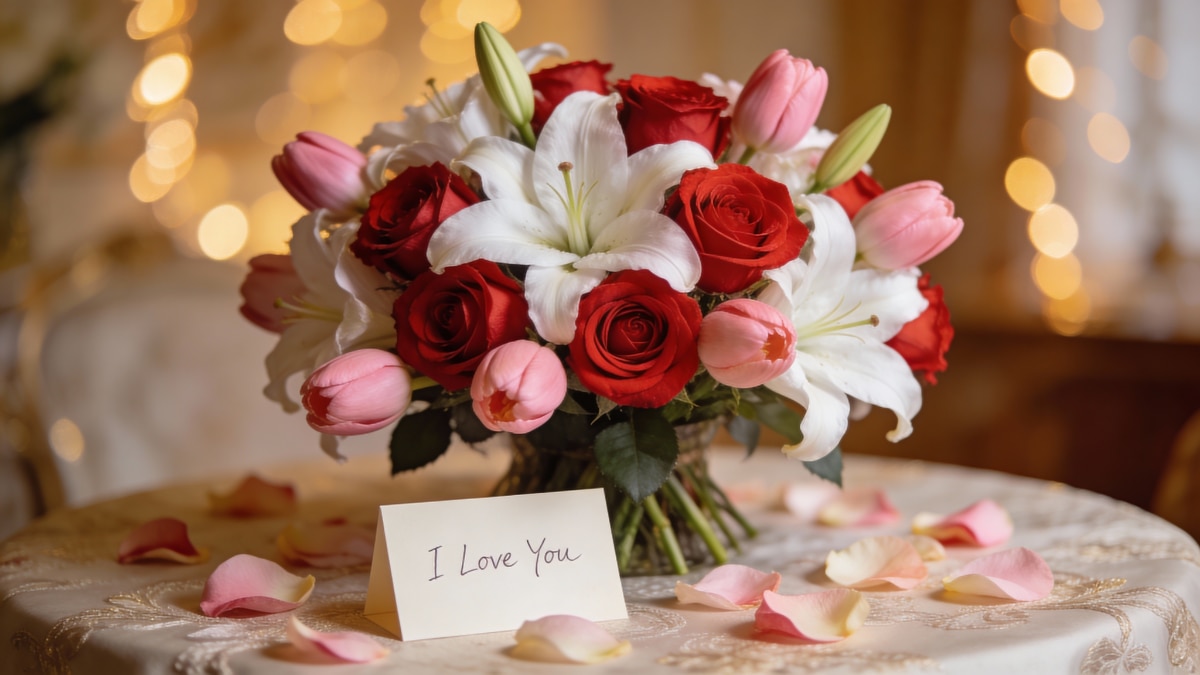
Do you think giving a bouquet of flowers simply means choosing red roses and adding a ribbon? You're missing the point.
Every flower tells a story. For centuries, bouquets have spoken a language that words alone cannot always express. And on Valentine's Day, this silent language takes on its full meaning.
The problem is that most people don't know what they're really saying when they hand over a bouquet. They think they're offering love when they're sending a message of friendship. Or worse, ill-placed apologies.
So before rushing to buy the first bouquet that catches your eye, take two minutes. Because your choice says much more than you imagine.
The red rose is not the only romantic option
Yes, the red rose has always symbolized passionate love. No one will blame you for giving one. It's classic, safe, expected.
But here's the catch: it's precisely because it's expected. If you want to make an impression, if you're looking to pleasantly surprise, a red rose alone might lack originality. Especially if your significant other has been receiving them every year for ten years.
The true magic of the language of flowers is nuance. A deep red rose doesn't send the same message as a nearly black burgundy rose. The first screams "I love you passionately." The second whispers "you are the sole object of my desire, no one else exists."
And what if you mix red roses with white roses? You create a message of union, marriage, lasting commitment. You say: "you and I, together forever." It's precise. It's powerful.
Each rose color tells a different story
Pink roses speak of tenderness and admiration. Perfect for a love that lasts, that has been built over time. They say "I deeply appreciate you" rather than "I burn for you."
Orange roses? Energy, enthusiasm, ardent desire. This is the bouquet for couples who live intensely.
Yellow roses symbolize friendship and joy. Not ideal for declaring your love on February 14th.
White roses embody purity and new beginnings. Ideal for a first Valentine's Day together.
Beyond roses, other hidden messages
Red tulips rival roses. They say "you are perfect in my eyes." Direct, frank, unambiguous.
Peonies embody delicate romance. The flower for couples who whisper secrets to each other.
Orchids? Luxury, refinement, rare beauty. "You are exceptional, unique, precious."
White calla lilies speak of magnificence. Multicolored ranunculus explode with joy.
Each flower carries its emotional weight.
The number of flowers also matters
A detail many ignore: the number of stems in your bouquet changes the message.
A single rose? "You are my only love, the one." It's pure, intense, radical. It works if you embrace the minimalist gesture and put all your sincerity into it.
Three roses? "I love you" simply. No more, no less. It's the perfect number for a clear declaration without overdoing it.
Twelve roses? The ultimate romantic classic. You say "be mine" or "my love for you grows every month of the year."
Twenty-four roses? Now you're stepping it up a notch. You're asserting "I think of you 24 hours a day." It's generous, impressive, and won't go unnoticed.
Fifty roses or more? You're declaring an absolute, boundless, unconditional love. Be careful not to go overboard if your relationship is still new. The effect can be overwhelming rather than touching.
Flowers to absolutely avoid
Carnations symbolize refusal in some cultures. Chrysanthemums are flowers of mourning in Europe. Orange marigolds signal jealousy. Do your research before buying.
Composing a precise message with multiple flowers
The true sophistication in the language of flowers is the mixed bouquet. You no longer say one thing; you tell a complete story.
Red roses + white lilies = passion and purity. You assert "my love for you is both ardent and sincere."
Pink tulips + peonies = admiration and tenderness. "I admire you and I cherish you."
Orchids + old roses = refinement and nostalgia. "You are precious, and every moment with you becomes a memory I cherish."
Colorful ranunculus + eucalyptus = joy and protection. "You light up my life, and I want to take care of you."
The possibilities are endless. You just need to understand what each flower means and combine them intelligently.
Tailor your bouquet to your story
First Valentine's Day? Opt for delicacy with pink tulips or pastel ranunculus.
Been together for several years? Red roses confirm that the passion is still there.
Marriage proposal? Mixed red and white roses, orchids for rarity.
Reconciliation? White roses (new beginnings) with pink roses (tenderness). But never without sincere apologies.
Context transforms the message
Delivered to the office? A public gesture that affirms your feelings. In private? An intimate moment that belongs only to the two of you.
A bouquet upon waking, spontaneously? Maximum impact because it's unexpected.
Giving flowers three days before or after Valentine's Day says "I don't need an imposed date to prove it to you." Some see more romance in this.
Flowers speak, but you have to know how to listen
You received a bouquet? Decipher it. Observe the colors, count the stems, identify the varieties. You might discover that the person put infinitely more thought into their choice than you imagined.
Are you giving one? Choose with intention. Not just with your eyes. Ask yourself what message you really want to convey. Then translate it into flowers.
The language of flowers is not dead. It's just forgotten by many. Those who still master it have a considerable advantage: they know how to say without words what others struggle to express in twenty sentences.
This Valentine's Day, don't just give flowers. Give a message. Precise, thoughtful, meaningful. Your significant other will notice. And remember.
To go further:
Here are other blog articles you might like:
Articles populaires


